
Best Vines for Southern California: What to Plant, Where to Plant & How to Train Them
A little climbing greenery can turn an ordinary fence into a garden feature, a pergola into a shady retreat, and a blank wall into something worth looking at.
But not all vines are created equal.
Some love the intense Southern California sunshine. Others prefer a little afternoon shade. Some can survive on relatively little water once established, while others need regular irrigation to stay lush.
And then there's the biggest misconception of all:
Not every vine knows how to climb!
Some naturally wrap around structures, others grab onto wires with tendrils, and certain varieties need a little human assistance to grow in the direction you actually want.
Before you plant a vine next to your fence and hope for the best, here's our EcoDesignSD guide to choosing, planting, and training beautiful climbing plants in San Diego.
1. First Things First: Sun or Shade?
Southern California gardens can have dramatically different growing conditions—even within the same property.
A sunny south-facing wall in Escondido is very different from a shaded courtyard in coastal La Jolla.
Before purchasing a vine, observe the planting location.
Full sun: Approximately 6 or more hours of direct sunlight daily.
Partial sun or partial shade: Roughly 3–6 hours of direct sun, depending on its intensity.
Bright shade: Plenty of natural light without prolonged direct sunlight.
And remember, reflected heat from concrete, stucco, and masonry can make a sunny wall significantly hotter.
Best Vines for Sunny Southern California Gardens
Bougainvillea — Bougainvillea spp.
A Southern California classic with vibrant pink, purple, red, orange, or white bracts.
Loves full sun.
Low-water once established in suitable conditions.
Excellent for fences, trellises, and pergolas.
Requires tying and training rather than climbing independently.
Thorny, so keep it away from narrow walkways.
Best for: Mediterranean landscapes, sunny walls, and colorful architectural accents.
Cape Honeysuckle — Tecoma capensis
A beautiful, vigorous plant with orange-red trumpet-shaped flowers that attract hummingbirds.
Full sun to light shade.
Drought-resistant once established.
Useful for screening and larger planting areas.
Requires support and training when grown as a vine.
Needs regular pruning to control its size.
Best for: Informal privacy screens, wildlife-friendly gardens, and sunny fences.
Roger's Red Grape — Vitis californica 'Roger's Red'
A spectacular ornamental grape with dramatic red autumn foliage.
Best color in sunny locations.
Low-water once established, although supplemental irrigation may improve performance.
Deciduous, meaning it loses its leaves in winter.
Excellent on sturdy arbors and pergolas.
Provides beautiful seasonal character.
Best for: Fall color, rustic pergolas, and California-inspired landscapes.
Best Vines for Partial Shade
Star Jasmine — Trachelospermum jasminoides
One of our favorite choices for creating a lush, evergreen screen.
Full sun to partial shade.
Fragrant white flowers.
Beautiful glossy green foliage.
Climbs by twining around suitable supports.
Needs moderate irrigation, especially while establishing.
Best for: Privacy fences, courtyard trellises, and fragrant outdoor dining spaces.
Lilac Vine — Hardenbergia violacea
A beautiful evergreen Australian vine that produces purple, pea-like flowers in late winter and early spring.
Full sun to partial shade, with afternoon protection beneficial in hotter areas.
Low-water once established.
Excellent for trellises and fences.
Provides seasonal color when many other plants aren't blooming.
Best for: Coastal gardens, courtyard fences, and water-conscious landscapes.
Clematis — Clematis spp.
For gardeners who love dramatic flowers, certain Clematis varieties are worth considering.
Many prefer sunlight on their foliage and cool, shaded roots.
Coastal conditions are generally more favorable than extreme inland heat.
Require rich, well-drained soil and regular irrigation.
Climb using leaf stalks that wrap around thin supports.
Best for: Decorative trellises in protected courtyards.
Deep shade is more challenging. Most flowering vines need at least some direct or bright filtered sunlight to bloom well.
2. Which Vines Are the Most Drought-Tolerant?
Not every drought-tolerant plant needs the same amount of water.
And there's an important distinction:
Drought-tolerant doesn't mean drought-proof.
Even low-water vines need regular irrigation while establishing their roots.
Once established, some of our favorite lower-water choices include:
Bougainvillea
Cape Honeysuckle
Lilac Vine
Roger's Red Grape
California Chaparral Honeysuckle (Lonicera subspicata)
For homeowners wanting a water-wise landscape, these are excellent plants to research.
Star Jasmine can also work beautifully in Southern California, but it generally needs more consistent irrigation to maintain lush growth.
EcoDesignSD Tip: Group vines with plants that have similar watering requirements. A low-water Bougainvillea and a thirsty tropical planting bed shouldn't automatically share the same irrigation valve.
3. Should You Plant Vines in Pots or Directly in the Ground?
Both options can work beautifully.
The right choice depends on available space, the mature size of the vine, and how much maintenance you're comfortable with.
Planting Directly in the Ground
In-ground planting is generally our preference for large, permanent vines.
Benefits include:
More room for root development
Better long-term growth potential
Less frequent watering once established
Greater stability during hot weather
Easier integration with drip irrigation
How Deep Should You Plant?
Here's an important rule:
Don't plant deeper just because you want the vine to grow taller.
For most nursery-grown vines, dig a hole approximately twice as wide as the root ball, but no deeper than the root ball itself.
Keep the top of the root ball level with or slightly above the surrounding soil, depending on drainage conditions.
Avoid burying the crown or stem.
Backfill primarily with the existing soil unless a soil test or specific plant requirement indicates otherwise.
What About the Soil?
Most commonly grown Southern California vines prefer well-draining soil.
For heavy clay soils:
Check drainage before planting.
Avoid creating a deep pocket of amended soil that traps water.
Consider a raised planting area where appropriate.
Avoid overwatering.
For sandy coastal soils:
Expect water to drain more quickly.
Monitor moisture during establishment.
Apply suitable mulch to reduce evaporation.
Planting Vines in Pots
Potted vines are wonderful for:
Small patios
Balconies
Courtyards
Rental properties
Decorative entryways
Areas without accessible planting beds
For many permanent climbing vines, a substantial container approximately 18–24 inches wide and deep is a useful starting range, depending on the species and nursery size.
Vigorous vines may eventually require significantly larger containers.
Choose a pot with drainage openings and use quality container potting mix rather than dense native garden soil.
Remember that potted plants generally dry out faster and need more frequent irrigation than established in-ground plants.
Our favorite look: One oversized architectural planter with a beautifully trained vine often looks more luxurious than several small pots scattered around a patio.
4. The Secret to Beautiful Vines: Train Them Early!
Here's where the fun begins.
Vines have different climbing habits.
Understanding how your particular vine grows determines the type of support it needs.
Twining Vines
Examples: Star Jasmine and Lilac Vine.
These plants wrap their stems around wires, trellises, or other narrow supports.
They need something to wrap around—not just a blank wall.
Tendril Climbers
Examples: Grapevines and Passionflowers.
These produce small tendrils that grab onto wires, mesh, or other supports.
Provide appropriately sized supports that the tendrils can reach and grip.
Scrambling Vines
Examples: Bougainvillea and climbing roses.
These plants produce long stems but don't reliably attach themselves to a wall.
You'll need to guide and loosely tie them to a support system.
Self-Clinging Vines
Some vines attach directly to surfaces using aerial roots or adhesive structures.
Be careful with these around stucco, siding, roofing, and older masonry.
For most residential projects, we prefer a separate trellis or cable system that keeps plants away from vulnerable building surfaces.
5. Three DIY Ways to Train Your Vines
DIY #1: Horizontal Stainless-Steel Cable Trellis
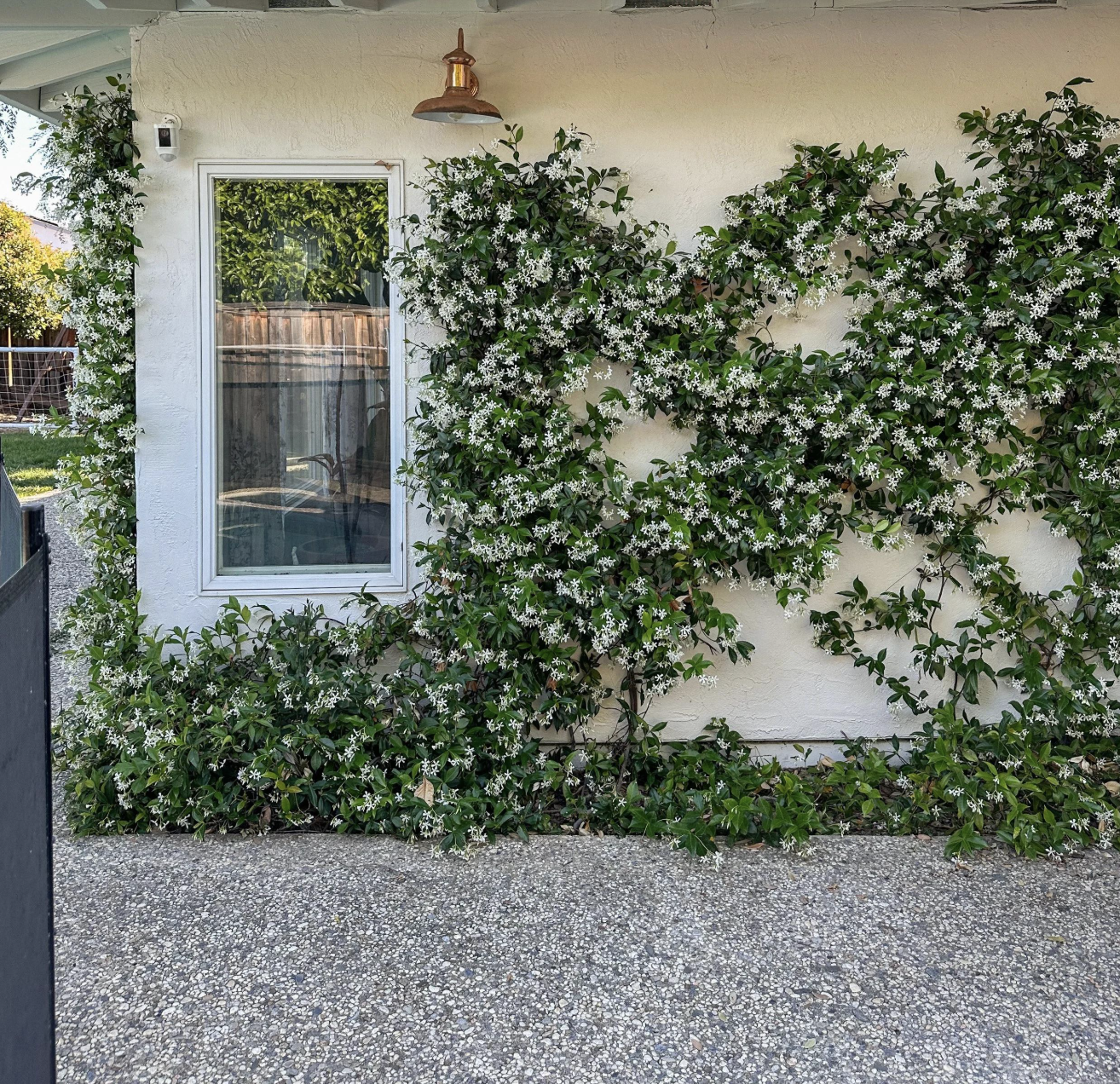
Best for: Star Jasmine, Bougainvillea, and other vines suited to training.
A clean cable trellis looks beautiful against modern stucco, wood fencing, or masonry.
You'll need:
Exterior-rated stainless-steel cable
Compatible tensioners and fittings
Suitable mounting brackets
Appropriate anchors for the supporting structure
Soft plant ties
Install the cables at intervals appropriate for the vine and the span.
For an illustrative small-scale layout, horizontal rows might be approximately 12–18 inches apart, but actual spacing and hardware specifications depend on the structure and plant.
Guide the young stems toward the wires and loosely attach them where necessary.
Avoid tightening ties around growing stems.
Design trick: Train some stems horizontally before allowing them to grow upward. This helps create more even coverage rather than one dense clump at the top.
DIY #2: Wooden Lattice or Slatted Trellis
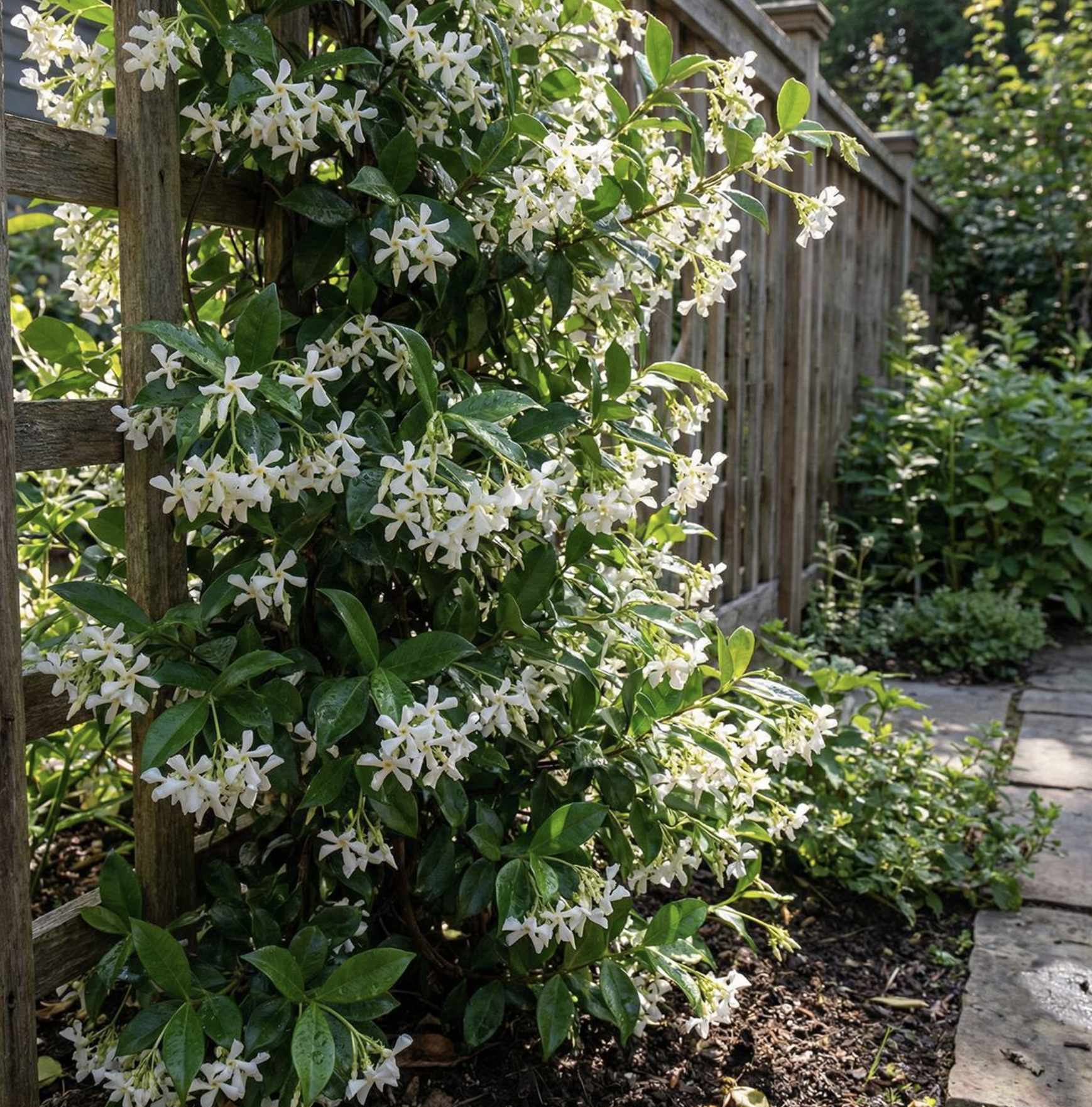
Best for: Star Jasmine, Lilac Vine, and decorative climbing plants.
A wooden trellis can be built from exterior-grade redwood or cedar.
Leave openings large enough for the vine to grow through and for future pruning.
Keep the trellis appropriately separated from the building surface for airflow and maintenance.
Attach it securely to suitable structural supports.
EcoDesignSD Tip: Match the trellis wood finish to an existing pergola, fence, or deck. Repeating materials creates a more cohesive landscape.
DIY #3: Pergola Vine Training
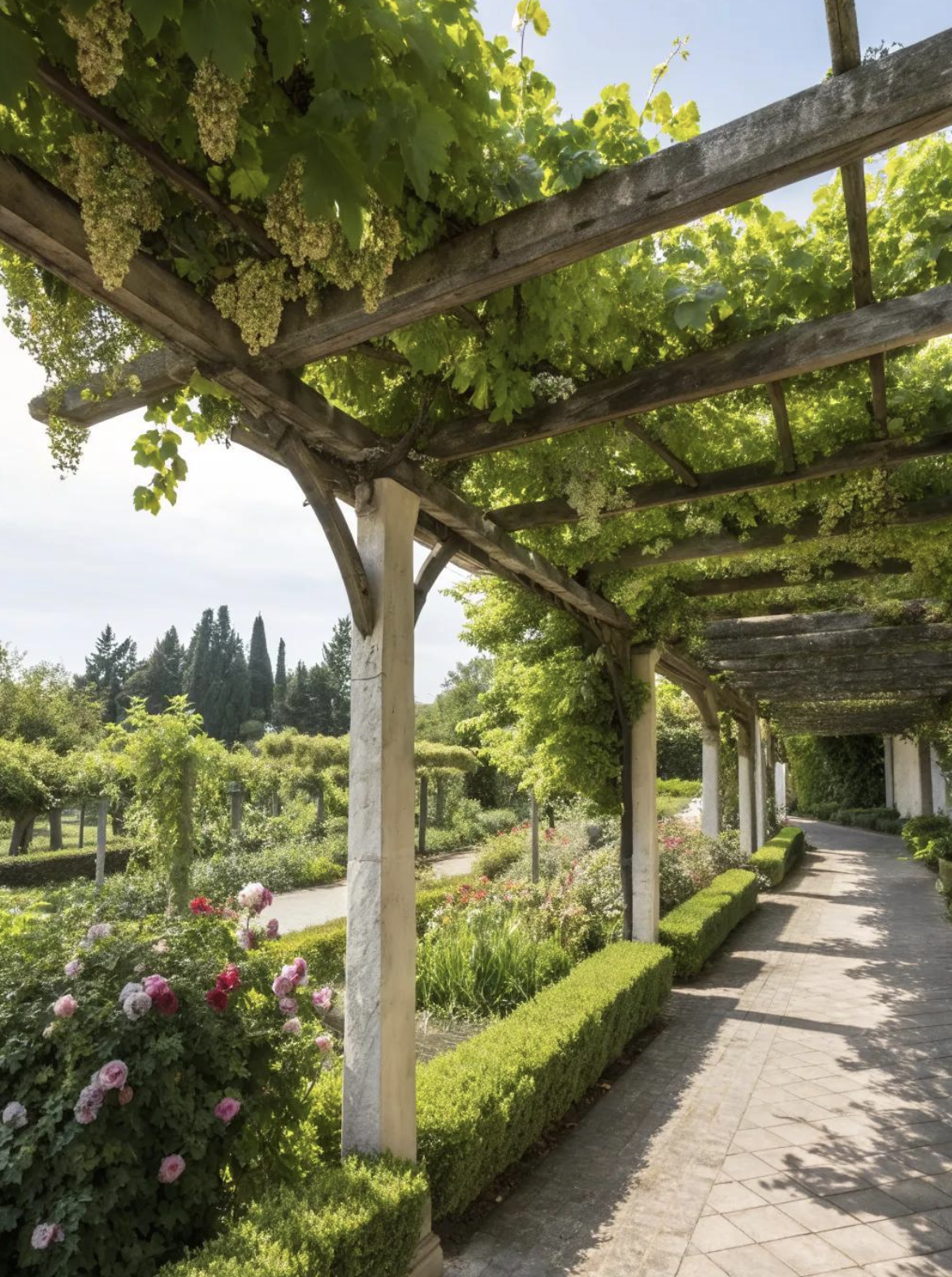
Best for: Grapevines, Bougainvillea, and selected other climbers on properly engineered structures.
Start by guiding one or two main stems upward along a designated post or separate climbing support.
Once they reach the upper structure, train the branches horizontally across the beams or wires.
Prune selectively to create balanced coverage.
Avoid letting vigorous vines grow into gutters, roofing, lighting fixtures, or structural joints.
And remember that a mature vine can become extremely heavy, especially when wet.
Your pergola must be designed to carry that additional load.
6. How to Keep Vines From Becoming a Tangled Mess
Here's a little secret:
The most beautiful climbing vines aren't necessarily the fastest-growing ones.
They're the ones that are trained consistently.
During the first year:
Inspect new growth regularly.
Guide stems toward the desired support.
Remove growth heading into unwanted areas.
Replace tight ties with adjustable ones.
Keep vines away from gutters and roofing.
Prune according to the plant's flowering cycle.
Don't automatically shear every vine into a flat green wall.
Selective pruning often preserves a more natural appearance and encourages better flowering.
For flowering vines such as Bougainvillea, excessive pruning can remove developing blooms.
7. Watch Out! Common Vine Pests in Southern California
Even healthy vines can occasionally attract unwanted visitors.
Aphids
Small insects that cluster on tender new growth.
Look for curled leaves, sticky residue, and ants.
Whiteflies
Tiny white insects that fly up when disturbed.
They can be especially troublesome on Bougainvillea and certain other ornamental vines.
Scale Insects
Small bumps attached to stems and leaves.
Heavy infestations may cause yellowing and weakened growth.
Mealybugs
White, cottony-looking insects often hiding around stems and leaf joints.
Caterpillars
Some caterpillars chew leaves and create irregular holes.
Bougainvillea loopers are a particular pest worth checking for when leaves suddenly develop chewing damage.
Spider Mites
These can become problematic during hot, dry weather.
Look for fine webbing and speckled or discolored leaves.
What Should You Do?
Start by identifying the pest correctly.
Inspect the undersides of leaves, check irrigation conditions, and remove heavily infested material where appropriate.
A strong spray of water can help dislodge some pests, provided the plant and location can tolerate it.
Encourage beneficial insects and avoid unnecessary broad-spectrum pesticide applications.
For persistent infestations, consult the University of California Integrated Pest Management resources before selecting a treatment.
8. Our Favorite Vine Combinations for Southern California
Mediterranean Courtyard
Bougainvillea + Lavender + Rosemary + Olive Tree
Beautiful with warm stucco, natural stone, and terracotta pots.
Modern Coastal Garden
Star Jasmine + Lomandra + Westringia + Foxtail Agave
A sophisticated combination of evergreen foliage, architectural plants, and soft textures.
California Wildlife Garden
Chaparral Honeysuckle + Cleveland Sage + California Buckwheat + Deer Grass
A naturalistic combination that supports pollinators and creates a distinctly California landscape.
Romantic Pergola
Grapevine + Lavender + Rosemary + Natural Stone
Ideal for creating seasonal shade and a relaxed Mediterranean atmosphere.
Keep irrigation appropriate to each plant group rather than watering everything equally.
9. When Is the Best Time to Plant Vines in San Diego?
For many vines, fall and early spring are excellent planting periods.
Cooler temperatures allow plants to establish roots without the intense stress of summer heat.
California native vines often benefit from fall planting as seasonal rainfall begins.
Frost-sensitive vines such as Bougainvillea may establish more safely during warmer spring weather, particularly in inland locations where frost is possible.
Regardless of planting season, new vines need careful irrigation until established.
10. Where to Buy Vines and DIY Trellis Materials
For Southern California homeowners, start with reputable nurseries and landscape suppliers.
Ornamental vines: Armstrong Garden Centers offers a variety of garden plants and supplies.
Professional plant sourcing: Everde Growers supplies landscape plants for larger projects.
Irrigation: SiteOne Landscape Supply and Ewing Outdoor Supply carry irrigation components.
DIY trellis supplies: Local lumberyards and building supply stores can provide wood, exterior fasteners, cable systems, and mounting hardware.
Always verify current inventory and select hardware appropriate for the structure, coastal exposure, and mature vine load.