
DIY Green Walls: How to Build a Beautiful Vertical Garden That Lasts in Southern California
Small space? Big garden dreams? Sometimes the best direction to grow is up!
A plain courtyard wall, an empty side yard, or an overlooked patio corner might be the perfect opportunity to create something beautiful.
Green walls, also called vertical gardens or living walls, are a creative way to introduce greenery, texture, and architectural interest without sacrificing valuable outdoor space.
And here's the best part: You don't necessarily need an elaborate commercial living-wall system to create one.
With a little creativity, the right materials, and thoughtful plant selection, you can build a custom vertical planter wall that looks like a professionally designed garden feature.
But before you grab your lumber and start planting succulents, let's talk about what really matters: structure, drainage, irrigation, sunlight, and surviving Southern California's rainy season.
Because a green wall should look just as beautiful after its first winter as it did on installation day.
1. Choose Your Green Wall Style
Not all green walls are created equal.
Freestanding Vertical Planter Walls
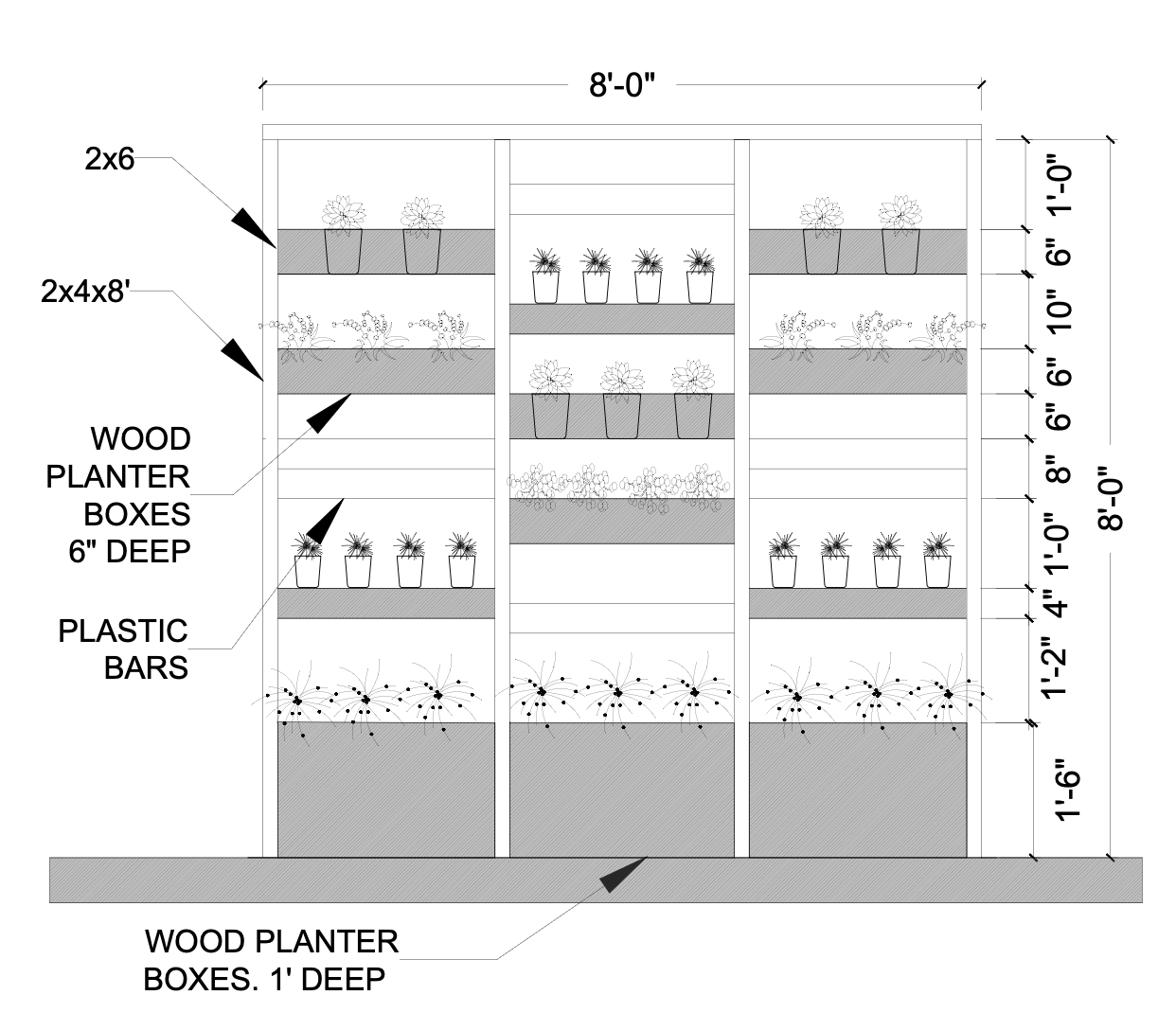
One of our favorite approaches at EcoDesignSD is combining horizontal wooden planter boxes with open framing and shelves.
Our custom green wall project features an approximately 8-foot-wide by 8-foot-tall design, incorporating shallow upper planters, deeper lower planting boxes, and horizontal display areas for smaller potted succulents.
The varying heights create visual interest while allowing different plants to grow comfortably.
This style works beautifully for:
Narrow courtyards and side yards
Outdoor privacy screens
Patio dividers
Modern succulent gardens
Small backyards
Architectural focal points
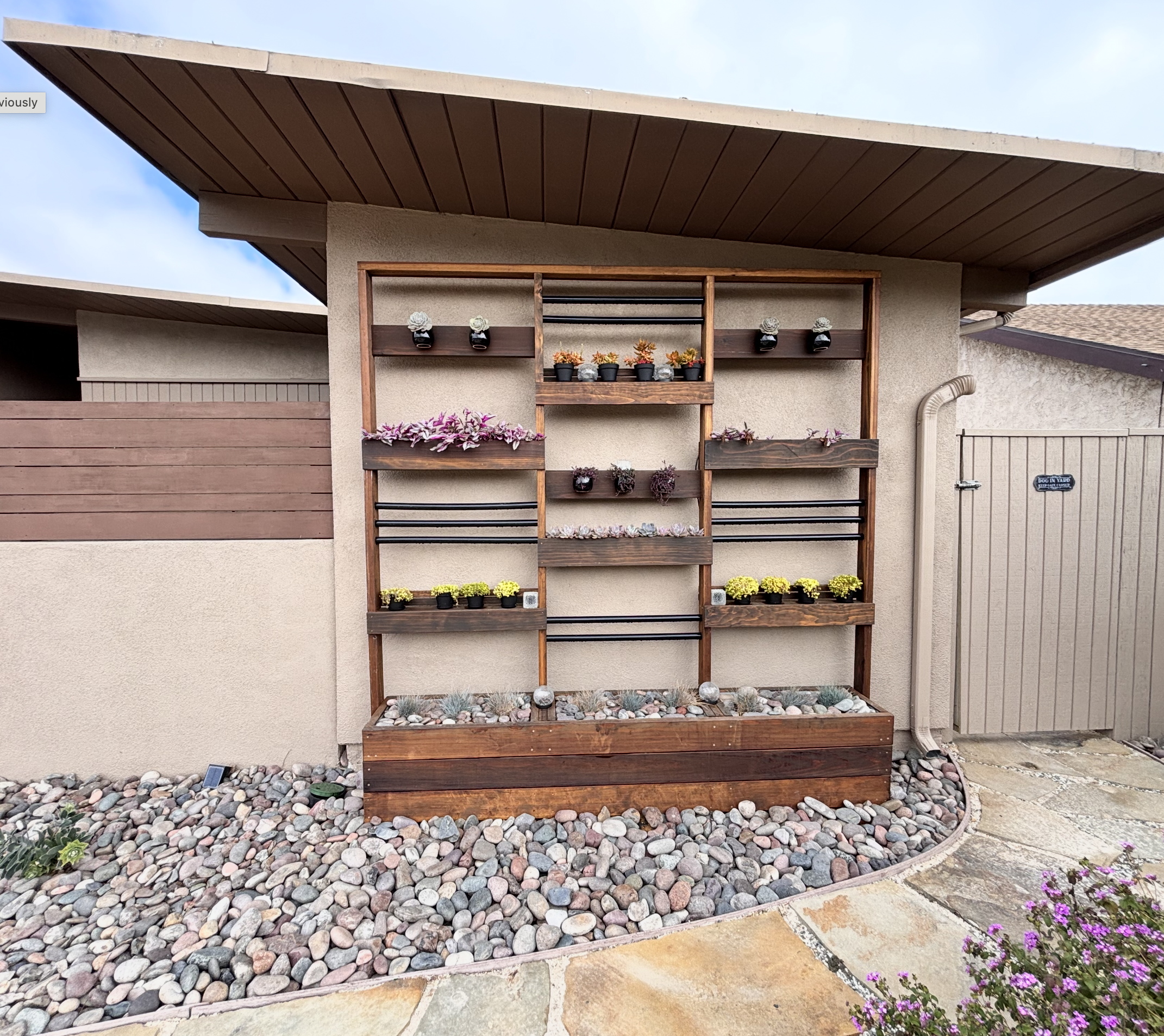
EcoDesignSD Design Tip: Don't fill every opening with plants. A little negative space allows the woodwork and individual plants to stand out.
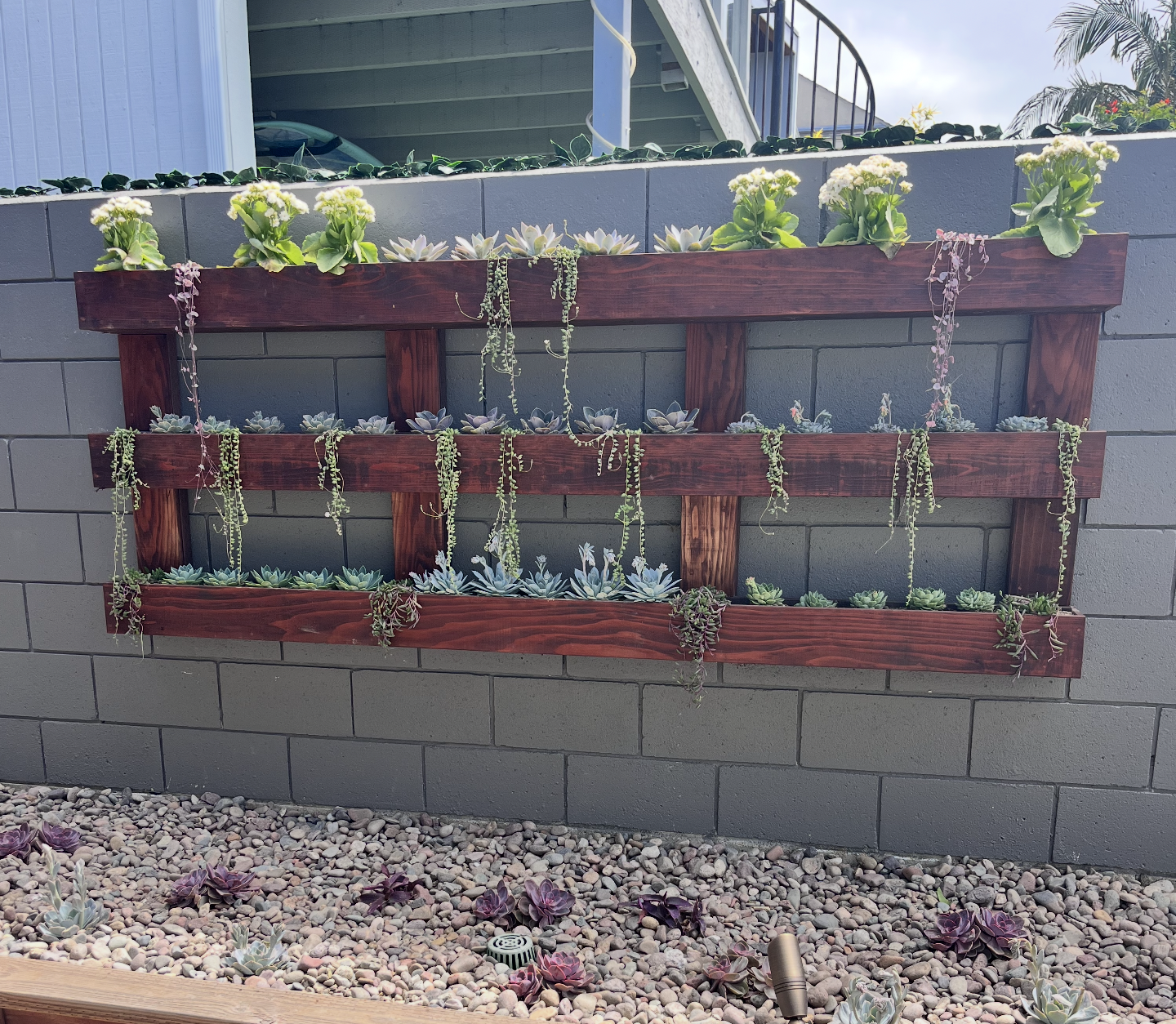
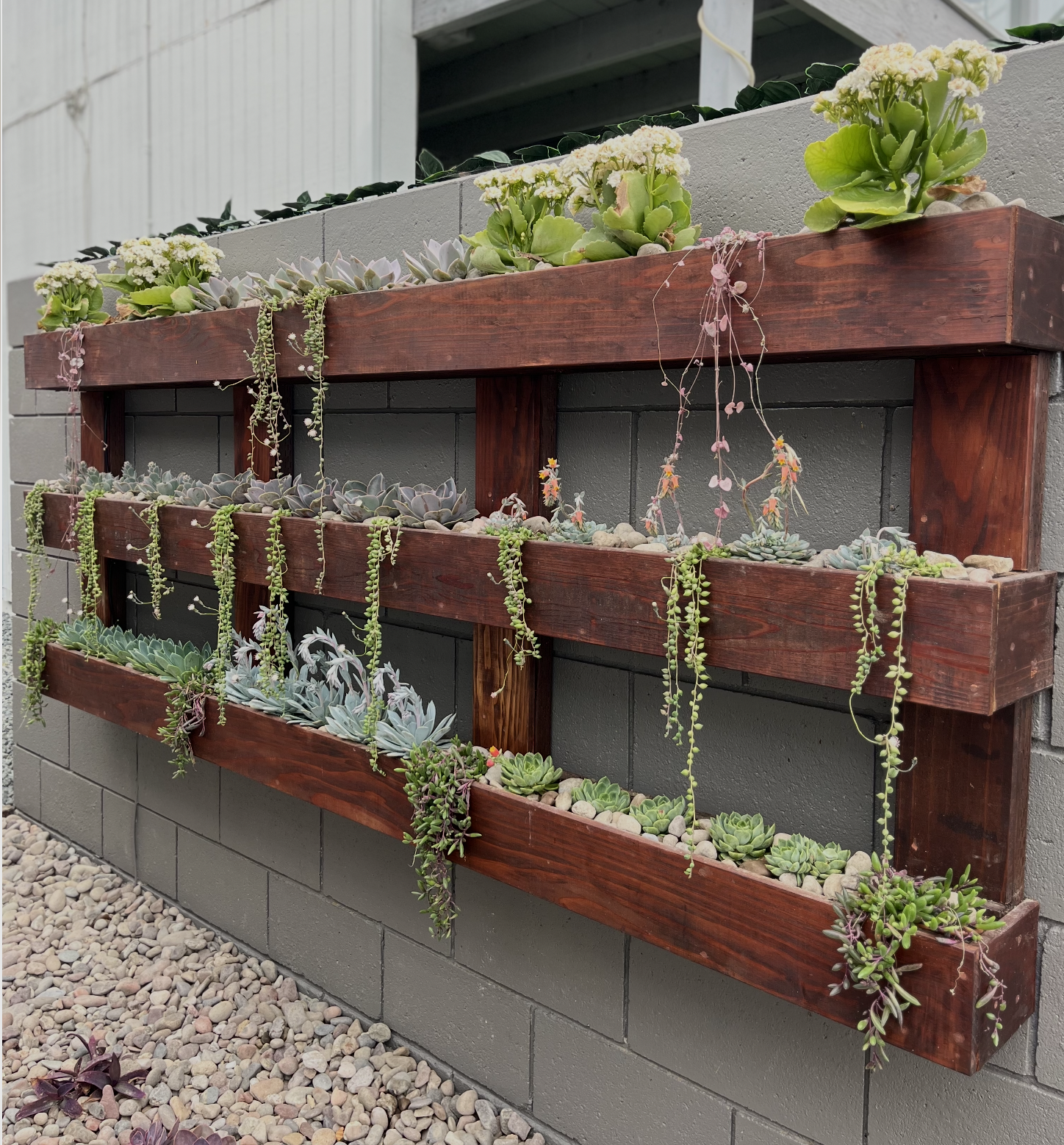
Wall-Mounted Planter Systems
Already have a sturdy wall or fence?
Horizontal planter boxes or modular systems can transform it into a vertical garden.
However, always verify that the supporting structure can safely carry the additional weight, particularly after the soil becomes saturated with rainwater.
Protect adjacent walls with appropriate waterproofing, drainage clearance, and moisture-resistant materials.
Trellis Green Walls
For a softer look, consider a trellis with climbing plants such as star jasmine.
This creates greenery with fewer individual planters, although climbing plants still require adequate support and ongoing pruning.
2. What Materials Should You Use?
Your green wall is exposed to sunshine, moisture, irrigation, wind, and seasonal temperature changes.
Choosing the right materials is just as important as choosing the right plants.
Redwood and Cedar
Both are attractive options for custom wooden planter walls.
Their natural appearance complements Southern California architecture, concrete, stone, and contemporary outdoor spaces.
For better longevity:
Select appropriate exterior-grade lumber.
Use corrosion-resistant screws and hardware.
Apply a quality exterior finish compatible with the wood.
Protect cut ends and exposed joints.
Avoid allowing wet soil to remain directly against decorative wood.
Our Tip: Dark-stained wood looks especially beautiful against blue-green succulents and light-colored concrete.
Powder-Coated Aluminum
For a more modern appearance, powder-coated aluminum provides a clean finish and resists rot.
It can be particularly useful in coastal communities such as La Jolla, Pacific Beach, and Del Mar.
Planter Inserts and Liners
Consider removable, UV-resistant planter inserts rather than filling decorative wooden boxes directly with soil.
These make future plant replacement and maintenance easier while helping protect the surrounding structure.
Just remember that every planter must still have proper drainage.
3. How Deep Should Your Planters Be?
Different plants need different amounts of growing space.
For example, our custom green wall concept incorporates:
6-inch-deep upper planter boxes: Suitable for selected compact succulents and shallow-rooted plants.
12-inch-deep lower planter boxes: Better suited to fuller plants and certain ornamental grasses.
These dimensions are examples from one project, not universal construction requirements. Actual planter depth should be determined by the mature plant size, root system, soil volume, and irrigation needs.
And don't forget about weight!
Wet soil, mature plants, and the planter structure can become surprisingly heavy.
An approximately eight-foot-tall freestanding wall requires properly designed anchoring, bracing, and structural support. Depending on its location and design, professional engineering or local approvals may be necessary.
4. Drainage: The Detail That Can Make or Break Your Green Wall
Let's talk about one of the biggest DIY mistakes.
You build a gorgeous planter wall.
You fill it with succulents.
Everything looks fantastic.
Then winter arrives.
The planters fill with water, the soil stays wet, and suddenly your beautiful succulents are looking considerably less enthusiastic.
Poor drainage is one of the biggest threats to a successful green wall.
Here's What We Recommend
Drainage holes: Every planter needs properly sized and unobstructed drainage outlets.
Well-draining soil: Use a potting mix appropriate for your plants. Succulents generally benefit from a mineral-rich, free-draining mix.
Air circulation: Leave appropriate space between the planters and nearby walls.
Controlled runoff: Direct water away from building foundations, vulnerable wall surfaces, and walkways.
Accessible maintenance: Make sure you can inspect and clean drainage outlets.
Should You Add Gravel to the Bottom?
Here's a gardening myth worth retiring.
Adding gravel beneath potting soil does not automatically improve drainage. It can actually leave water trapped in the soil above the gravel layer.
Instead, focus on a suitable potting mix and effective drainage openings.
5. Preparing Your Green Wall for Southern California's Rainy Season
San Diego may be famous for sunshine, but our winter storms can bring significant rainfall.
And vertical gardens experience rain differently from traditional planting beds.
Upper planters may overflow into lower planters, increasing the amount of water those plants receive.
Before the Rainy Season
Check the following:
Clear blocked drainage holes.
Inspect wood for deterioration.
Tighten loose brackets and fasteners.
Reduce irrigation as seasonal conditions change.
Check that water isn't collecting against your house.
Inspect outdoor lighting and electrical connections.
After Heavy Rain
Look for standing water, soil erosion, damaged plants, and saturated planting areas.
Avoid watering again until the soil has dried sufficiently for the plants you're growing.
EcoDesignSD Tip: Consider designing upper planters with independent drainage rather than allowing all their runoff to cascade into the planters below.
This is particularly important when growing drought-tolerant succulents.
6. The Best Plants for Green Walls in Southern California
The most successful vertical gardens combine plants with similar water and sunlight requirements.
Here are some of our favorites.
Echeveria — The Sculptural Beauty
With their symmetrical rosettes and beautiful shades of green, blue, pink, and purple, Echeverias are ideal for adding structure.
Try:
Echeveria elegans
Echeveria imbricata
Echeveria 'Perle von Nürnberg'
Many varieties prefer bright light with protection from intense afternoon heat.
Sedum — The Space Filler
Sedums offer interesting textures and can soften planter edges.
Try:
Sedum rubrotinctum — Jelly Bean Plant
Sedum morganianum — Burro's Tail
Sedum adolphii — Golden Sedum
Burro's Tail is particularly beautiful cascading from an upper planter.
String of Pearls — The Cascading Accent
Curio rowleyanus produces trailing strands of round, pearl-like leaves.
It's a wonderful choice for sheltered vertical gardens with bright indirect light and excellent drainage.
Keep it away from children and pets who may ingest the plant.
Aeonium — Architectural Drama
Aeoniums create larger rosettes and provide contrast against smaller succulents.
Try:
Aeonium arboreum
Aeonium 'Zwartkop'
Aeonium haworthii
Choose compact varieties for shallow boxes and allow adequate space for mature growth.
Tradescantia — A Splash of Purple
Tradescantia adds vibrant purple and silver foliage.
Its trailing habit makes it attractive in horizontal planters.
However, it typically requires more consistent moisture than many succulents, so consider separating it into its own irrigation group. Some types spread readily and require containment.
Lomandra — Soft, Grass-Like Texture
Compact Lomandra varieties can soften the lower portion of a green wall.
Their arching foliage creates movement and contrasts beautifully with succulent rosettes.
Choose a sufficiently deep planter and allow room for mature growth.
7. Three Beautiful Green Wall Plant Combinations
Modern Succulent Wall
Echeveria + Aeonium + Sedum + Burro's Tail
Perfect for a contemporary courtyard with bright light and excellent drainage.
Coastal California Wall
Echeveria + selected coastal-adapted succulents + compact Lomandra
A relaxed, water-conscious look that complements wood, stone, and concrete.
Lush Courtyard Wall
Tradescantia + suitable ferns + compact Carex + trailing foliage
Best for protected, partially shaded spaces with more consistent irrigation.
Design Tip: Repeat a limited selection of plants rather than introducing a different species into every planter. Repetition creates a more polished, high-end appearance.
8. Irrigation: Should You Install Drip?
For most permanent vertical gardens, yes.
Hand-watering an eight-foot-tall green wall might sound manageable initially, but consistent watering can become challenging.
A properly designed drip irrigation system allows water to reach individual planters without unnecessary overspray.
Consider including:
Dedicated irrigation control
Pressure regulation and filtration
Drip emitters or dripline
Accessible fittings
Seasonal watering adjustments
Separate zones for plants with different water requirements
Don't rely on water draining from upper planters to irrigate everything below.
Each planter should receive the appropriate amount of water for its plants.
9. Lighting: Give Your Green Wall a Second Life After Sunset
A beautiful vertical garden shouldn't disappear when the sun goes down.
Thoughtful lighting can transform your green wall into an architectural feature.
Hidden LED Strip Lighting
Outdoor-rated LED strips installed beneath selected shelves create a soft glow.
Warm white lighting around 2700K–3000K generally works beautifully with wood and greenery.
Small Landscape Spotlights
Low-voltage spotlights positioned near the base can highlight trailing plants and create shadows against the structure.
Integrated Accent Lights
Small fixtures incorporated into lower planter faces or adjacent hardscape can create a subtle, sophisticated effect.
For outdoor installations, use properly rated fixtures, protected electrical connections, and appropriate GFCI protection where required.
Our Favorite Trick: Don't illuminate every planter. Highlight a few key areas and allow the remaining plants to fall into soft shadow.
10. Five DIY Mistakes to Avoid
1. Using untreated or poorly protected wood. Moisture exposure can shorten the life of the structure.
2. Forgetting drainage. Beautiful planters won't compensate for saturated roots.
3. Mixing plants with incompatible water needs. A succulent and a moisture-loving fern generally shouldn't share one irrigation compartment.
4. Overcrowding the design. Plants grow. Leave enough space for them to mature.
5. Forgetting maintenance access. Make sure you can reach, inspect, prune, and replace plants without dismantling the structure.
11. Where to Find Materials and Plants in San Diego
Building a custom green wall is easier when you know where to source the materials.
Lumber and construction materials: Local lumberyards and building suppliers offer redwood, cedar, framing materials, fasteners, and exterior finishes.
Irrigation: SiteOne Landscape Supply and Ewing Outdoor Supply offer drip irrigation components, tubing, regulators, and irrigation equipment.
Plants: Everde Growers supplies landscape plants, while Moosa Creek Nursery specializes in California native plants.
Lighting: FX Luminaire offers professional landscape lighting products suitable for custom outdoor projects.
Always confirm product availability, specifications, and suitability before purchasing.
12. The EcoDesignSD Green Wall Checklist
Before starting your project, ask:
Is the structure safely supported and anchored?
Are the materials appropriate for outdoor exposure?
Does every planter drain properly?
Where will excess rainwater go?
Are the plants compatible with the sunlight and irrigation?
Can the irrigation be adjusted seasonally?
Will the plants have enough room to mature?
Can everything be accessed for maintenance?
Is the lighting safe for wet outdoor conditions?
If you've answered these questions, you're already well ahead of many DIY installations.
Small Space, Big Impact
One of the most exciting things about vertical gardens is their ability to transform an otherwise overlooked area.
A plain wall becomes a focal point.
A narrow courtyard becomes a garden.
A small patio suddenly feels layered, welcoming, and full of life.
And when the structure, planting, irrigation, drainage, and lighting are designed together, the result can be both beautiful and practical.
At EcoDesignSD, we specialize in custom landscape design and construction throughout San Diego County, creating outdoor environments that combine thoughtful planting, natural materials, irrigation, lighting, and architectural details.
Whether you're tackling a DIY project or planning a custom-built green wall as part of a larger landscape renovation, a successful garden starts with good design.
Because the best green walls don't just grow upward. They're built to last.